From Breast to Bowl: A quasi-experimental, mixed-methods evaluation of peer learning to improve complementary feeding in rural northeastern Ghana
DOI:
https://doi.org/10.26596/wn.202617319-25
Keywords:
complementary feeding, caregiver practices, northeastern GhanaAbstract
Background
In rural Ghana, the transition from breastfeeding to complementary feeding is critical; however, gaps in maternal and child nutrition services contribute to low dietary diversity, inadequate feeding frequency, limited maternal knowledge, and poor child growth. This study evaluates the impact of peer-learning approaches on improving these practices.
Methods
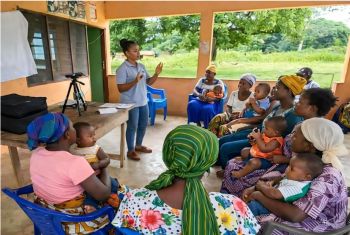
A quasi-experimental mixed-methods design was conducted in Ghana’s North East Region, comparing intervention (n=4) and comparison (n=4) communities. Intervention sites implemented peer-learning groups with counseling and caregiver discussions, while comparison sites continued routine practices. A probability sample of 420 caregivers participated. Household surveys assessed dietary diversity, feeding frequency, and maternal knowledge of recommended practices. Facility records documented counseling sessions and staff training. Focus group discussions and key informant interviews were conducted with caregivers and health workers.
Results
Dietary diversity increased by 24 percentage points (pp) in intervention communities versus 3 pp in comparison sites (p=.001). Feeding ≥3 meals/day rose by 23 pp in intervention areas compared to 4 pp (p<.001). Appropriate knowledge scores improved by 38 pp in intervention sites versus 8 pp in comparison areas (p<.001). Facility counseling use rose from 2.1 to 3.4 sessions/month in intervention areas (t(28)=4.80, p<.001) and from 2.0 to 2.2 in comparison sites. Qualitative narratives confirmed dietary changes, e.g., “We used to give only maize porridge, but now we add groundnut and beans” (32-year-old mother, FGD).
Conclusions
Peer-led education, male caregiver engagement, and strengthened facility support improved complementary feeding. These findings highlight scalable nutrition interventions in Ghana and provide transferable lessons for other low-resource settings.
Keywords:complementary feeding, caregiver practices, northeastern Ghana
Downloads
References
Abebe, Z., Haki, G. D., & Baye, K. (2017). Health extension workers’ knowledge and counselling skills on complementary feeding in Ethiopia. Food and Nutrition Bulletin, 38(4), 560–569. https://doi.org/10.1177/0379572117723136
Adams, L., Abubakari, A., & Yakubu, S. (2025). Drivers of inappropriate complementary feeding in Nalerigu Municipality, North East Region, Ghana. Springer.
Ali, M., & Ali, R. B. (2025). Feeding practices and nutritional outcomes in neonates with sepsis in rural health facilities of Northern Ghana: A mixedmethods analysis. International Journal of Research and Scientific Innovation. https://doi.org/10.51244/IJRSI.2025.1215PH000225.7
Aryeetey, R., & DakoGyeke, M. (2025). Early initiation of breastfeeding and child health outcomes in Ghana. Journal of Maternal and Child Health, 29(1), 12–24.
Aryeetey, R., & DakoGyeke, M. (2025). Early initiation of breastfeeding and its determinants in Ghana: Evidence from national surveys. Maternal and Child Health Journal, 29(2), 210–222.
Bronfenbrenner, U. (1979). The ecology of human development: Experiments by nature and design. Harvard University Press.
Ghana Statistical Service. (2024). Ghana Demographic and Health Survey 2024. Accra: GSS.
Ghana Statistical Service, Ghana Health Service, & ICF. (2022). Ghana Demographic and Health Survey 2022. Accra, Ghana, and Rockville, Maryland, USA: GSS, GHS, and ICF.
Issaka, A. I., Agho, K. E., Page, A., Burns, P., & Dibley, M. J. (2018). Determinants of inadequate complementary feeding practices in West Africa. Maternal & Child Nutrition, 14(1), e12577. https://doi.org/10.1111/mcn.12577
Lwanga, S. K., & Lemeshow, S. (1991). Sample size determination in health studies: A practical manual. Geneva: World Health Organization. https://doi.org/10.14302/issn.2574-612X.ijpr-17-1753.
Ogbo, F. A., Page, A., Idoko, J., Claudio, F., & Agho, K. E. (2017). Trends in complementary feeding indicators in Nigeria, 2003–2013. BMJ Open, 7(10), e016317. https://doi.org/10.1136/bmjopen-2017-016317
Saaka, M., & Hammond, C. (2025). Poor complementary feeding practices and high prevalence of malnutrition in northern Ghana. International Journal of Child Nutrition, 11(2), 101–115.
Shadish, W. R., Cook, T., D., & Campbell, D. T. (2002). Experimental and quasi-experimental designs for generalized causal inference. Houghton Mifflin.
UNICEF. (2025). Child Nutrition Report 2025. New York: UNICEF.
WHO. (1993). Counselling for maternal and child nutrition: Community counselling tools. Geneva: World Health Organization.
WHO. (2008). Indicators for assessing infant and young child feeding practices: Part 1 definitions. Geneva: World Health Organization.
WHO. (2023). Infant and young child feeding: Guiding principles for complementary feeding of the breastfed child. Geneva: World Health Organization.
Downloads
Published
Data Availability Statement
Data availability statement: The data on which this study is based will be made available upon reasonable request.
Issue
Section
License
Copyright (c) 2026 Dr. Mohammed Ali; Zakaria Abotiyire Iddrisu; Abdul Ganiu, Mohammed Damata Yakubu

This work is licensed under a Creative Commons Attribution 4.0 International License.
Authors retain all copyrights. In making a submission to World Nutrition, they are certifying that all material is theirs except quotations, as indicated, and that they have obtained permission for any photos, tables, or graphics taken from other publications or websites.
How to Cite
Share