Leveraging orange-fleshed sweetpotato to advance childhood nutrition in Sub-Saharan Africa
DOI:
https://doi.org/10.26596/wn.202617191-113Keywords:
Aflatoxin, Complementary food, Infant nutrition, Orange-fleshed sweetpotato, Phytate, Sub-Saharan Africa, Vitamin AAbstract
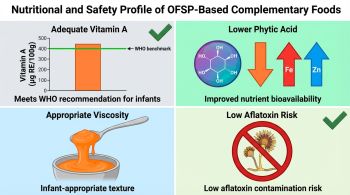
Childhood undernutrition, a public health challenge in sub-Saharan Africa, contributes to stunted growth, weakened immune systems, and increased child mortality. Among micronutrient deficiencies, vitamin A deficiency is the most prevalent, affecting nearly half of preschool-aged children. The orange-fleshed sweetpotato (OFSP), a biofortified crop rich in β-carotene, a provitamin A, is a potential sustainable food-based approach to curb the prevalence of vitamin A deficiency. This narrative review synthesises evidence on vitamin A, phytic acid, aflatoxin content, and viscosity of OFSP-based complementary foods. A comprehensive literature search was conducted across Web of Science, Scopus, and Google Scholar to identify studies (n = 38) published between 1985 and 2025. All articles used for this review were peer-reviewed and included reports on provitamin A or vitamin A, phytate, viscosity, and aflatoxin levels in complementary foods made with OFSP. Studies reporting only agronomic data or published in languages other than English were excluded. The vitamin A levels of the OFSP-based complementary foods met the WHO-recommended adequate intake of 400 μg RE/100 g for infants. OFSP-based complementary foods had lower phytate levels, making their nutrients more readily available for absorption. In addition, they had a thinner consistency, appropriate for infants. OFSP is also a low-risk crop for aflatoxin contamination. Based on the review findings, OFSP-based complementary foods could be better alternatives for infant feeding. Incorporating OFSP into nutrition plans could be key to addressing malnutrition and vitamin A deficiency, helping infants and young children in the region achieve positive health outcomes.
Downloads
Published
Issue
Section
License
Authors retain all copyrights. In making a submission to World Nutrition, they are certifying that all material is theirs except quotations, as indicated, and that they have obtained permission for any photos, tables, or graphics taken from other publications or websites.