Can Taste Rating of Groundwater Samples for the Presence of Iron Be A Novel Approach to Groundwater Iron Assessment?
DOI:
https://doi.org/10.26596/wn.20189122-30Keywords:
Groundwater Iron Assessment, Taste-Rating, Bangladesh, Iron deficiencyAbstract
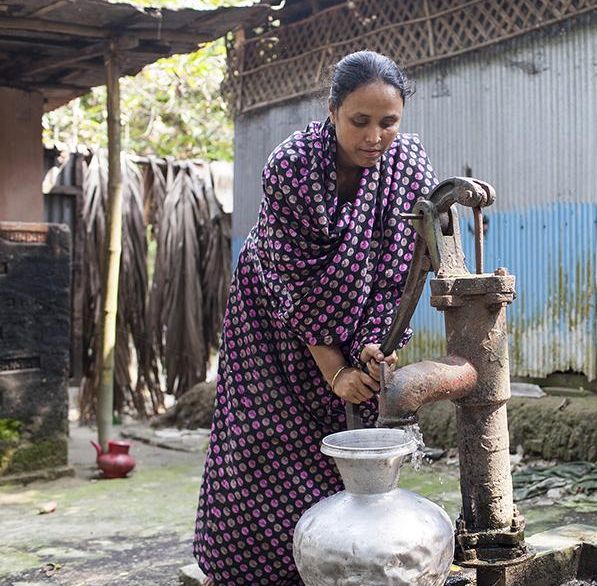
Groundwater has been shown to contribute markedly to the daily iron intake of the rural Bangladeshi population and is currently characterized as an under-assessed possible source of dietary iron. Estimation of the levels of iron in groundwater in relation to dietary/nutritional assessments has been called for. However, the ability to do this may be limited due to unavailable equipment or technical, logistical and financial issues in remote areas of low- to middle-income countries. Groundwater with higher levels of iron has distinctive organoleptic properties such as a characteristic metallic/bitterly taste and reddish color. Anecdotal experience suggests that there is an association between a stronger metallic taste of water and its iron content. Therefore, we conducted a cross-sectional pilot study assessing the relationship of taste perception for iron in groundwater and its actual concentration of iron. Thirteen tube-wells were selected systematically in a rural village of northern Bangladesh. A brief structured interview was conducted with a systematic sampling of people living nearby to collect information on the tube-wells, perception of the taste of water from the wells, and their overall perception of the level of iron in the water. Two observers from the research team tasted a water sample from each well for iron and compared their observations. Iron concentration of the tube-well water was determined quantitatively by a test kit (Hach kit model 18B). The concentration of iron was significantly higher in water taste-rated by both the villagers and observers as "strong" for iron than in water taste-rated as having "some" iron. There were significant correlations between the taste-ratings of the two observers and between the observers and villagers. Bland-Altman plotting suggests that external observers are likely to provide valid and reproducible taste-ratings for the presence of iron in the water. A larger study is required to validate tasting as a cheap, simple and novel way to assess iron concentration in groundwater.
Downloads
Downloads
Published
Issue
Section
License
Authors retain all copyrights. In making a submission to World Nutrition, they are certifying that all material is theirs except quotations, as indicated, and that they have obtained permission for any photos, tables, or graphics taken from other publications or websites.
How to Cite
Share