The Ethics of Food-as-Medicine in Chronic Disease Prevention: Evidence, Equity, and Public Health Communication
DOI:
https://doi.org/10.26596/wn.2026173164-169
Keywords:
food as medicine, public health nutrition, dietary strategies, chronic disease prevention, chronic inflammation, public health nutrition, medical misinformationAbstract
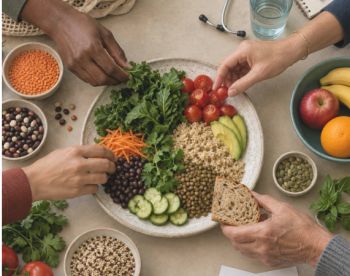
Purpose: This commentary argues that food-as-medicine communication in chronic disease prevention should be evidence-calibrated, equity-centered, culturally responsive, and clinically responsible. The article focuses on how clinicians, public health organizations, and nutrition communicators can discuss food, dietary patterns, food access, and disease prevention without overstating certainty or implying that diet replaces medical care.
Approach: The commentary synthesizes selected peer-reviewed literature, national and international nutrition guidance, and public health ethics principles into a practical communication framework. The synthesis distinguishes mechanistic, observational, randomized, implementation, and guideline-level evidence, and combines these evidence categories with ethical considerations related to autonomy, nonmaleficence, justice, culture, and social determinants of health. The central argument is that food-as-medicine can support chronic disease prevention only when public messages clearly separate evidence-based assertions from opinion, acknowledge uncertainty, address food access barriers, avoid disease-cure claims, and encourage clinician oversight for high-risk patients. The article proposes practical safeguards for ethical communication, including evidence-proportionate wording, plain-language uncertainty statements, separation of dietary-pattern guidance from supplement or wellness-product claims, attention to affordability and cultural relevance, and explicit integration with standard medical care.
Downloads
References
Anderson, E., Wei, R., Liu, B., Plummer, R., Kelahan, H., Tamez, M., Marrero, A., Bhupathiraju, S., & Mattei, J. (2021). Improving healthy food choices in low-income settings in the United States using behavioral economic-based adaptations to choice architecture. Frontiers in Nutrition, 8, 734991. https://doi.org/10.3389/fnut.2021.734991
Berkowitz, S. A., Delahanty, L. M., Terranova, J., Steiner, B., Ruazol, M. P., Singh, R., & Wexler, D. J. (2019). Medically tailored meal delivery for diabetes patients with food insecurity: A randomized cross-over trial. Journal of General Internal Medicine, 34(3), 396–404. https://doi.org/10.1007/s11606-018-4716-z
Downer, S., Berkowitz, S. A., Harlan, T. S., Olstad, D. L., & Mozaffarian, D. (2020). Food is medicine: Actions to integrate food and nutrition into healthcare. BMJ, 369, m2482. https://doi.org/10.1136/bmj.m2482
Global Burden of Disease 2017 Diet Collaborators. (2019). Health effects of dietary risks in 195 countries, 1990–2017: A systematic analysis for the Global Burden of Disease Study 2017. The Lancet, 393(10184), 1958–1972. https://doi.org/10.1016/S0140-6736(19)30041-8
Hager, K., Cudhea, F. P., Wong, J. B., Berkowitz, S. A., Downer, S., & Mozaffarian, D. (2022). Association of national expansion of insurance coverage of medically tailored meals with estimated hospitalizations and health care expenditures in the US. JAMA Network Open, 5(10), e2236898. https://doi.org/10.1001/jamanetworkopen.2022.36898
Mozaffarian, D., Blanck, H. M., Garfield, K. M., Wassung, A., & Petersen, R. (2022). A food is medicine approach to achieve nutrition security and improve health. Nature Medicine, 28, 2238–2240. https://doi.org/10.1038/s41591-022-02027-3
National Academies of Sciences, Engineering, and Medicine. (2019). Dietary Reference Intakes for Sodium and Potassium. The National Academies Press. https://doi.org/10.17226/25353
U.S. Department of Agriculture and U.S. Department of Health and Human Services. (2020). Dietary Guidelines for Americans, 2020–2025. 9th Edition. https://www.dietaryguidelines.gov/
World Health Organization. (2012a). Guideline: Potassium Intake for Adults and Children. World Health Organization. https://www.who.int/publications/i/item/9789241504829
World Health Organization. (2012b). Guideline: Sodium Intake for Adults and Children. World Health Organization. https://www.who.int/publications/i/item/9789241504836
Downloads
Published
Data Availability Statement
All relevant data are available within the manuscript.
Issue
Section
License
Copyright (c) 2026 Sri Pranita Cherukuri

This work is licensed under a Creative Commons Attribution 4.0 International License.
Authors retain all copyrights. In making a submission to World Nutrition, they are certifying that all material is theirs except quotations, as indicated, and that they have obtained permission for any photos, tables, or graphics taken from other publications or websites.
How to Cite
Share