Maternal capabilities, knowledge and attitudes toward infant nutrition among pregnant women in Isuikwuato Local Government Area, Abia State, Nigeria
DOI:
https://doi.org/10.26596/wn.2026172139-148
Keywords:
attitudes, infant nutrition, knowledge, maternal capabilities, pregnant womenAbstract
Background
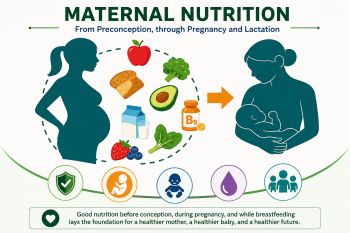
Maternal capabilities during pregnancy are crucial during the first 1,000 days of a child's life, which is from conception to their second birthdays.
Objective
The purpose of the present study was to assess the maternal capabilities, knowledge and attitudes of pregnant women towards infant nutrition in the first 1,000 days of life in Isuikwuato Local Government Area (LGA), Abia State, Nigeria.
Methods
A community-based cross-sectional study was conducted among a sample of 186 pregnant women aged 15–49 years residing in the more easily accessible areas of Isuikwuato LGA. Data were collected using a semi-structured interviewer-administered questionnaire adapted from the WHO/UNICEF infant and young child feeding assessment tools. Information obtained included socio-demographic characteristics, maternal capabilities, knowledge, and attitudes toward infant nutrition. Data were analysed using descriptive statistics, including frequencies, percentages, means, and standard deviations, while Pearson correlation analysis was used to determine associations between variables. Statistical significance was set at p < 0.05.
Results
Most participants had a tertiary education (83.9%) and high income (83.3% had ≥N71,000). A majority had high decision-making autonomy (73.1%), low social support (91.9%), and low self-efficacy (61.3%). They had good knowledge (90.3%) and positive attitudes (51.6%) towards infant nutrition. Decision-making autonomy was significantly associated with knowledge on infant nutrition (p < 0.05). Their attitude towards infant nutrition was significantly associated with social support and perceived health status.
Conclusion
Knowledge and attitudes toward infant feeding were satisfactory in this sample of high-income, well-educated pregnant women, despite a lack of social support.
Downloads
Downloads
Published
Data Availability Statement
Data will be provided based on request.
Issue
Section
License
Copyright (c) 2026 Ijioma Okorie, Eberechi A. Ufere, Amarachi J. Odii, Oluchi Umeofor

This work is licensed under a Creative Commons Attribution 4.0 International License.
Authors retain all copyrights. In making a submission to World Nutrition, they are certifying that all material is theirs except quotations, as indicated, and that they have obtained permission for any photos, tables, or graphics taken from other publications or websites.
How to Cite
Share