Predicting Early Childhood Stunting and Associated Factors in Kenya Using Machine Learning
DOI:
https://doi.org/10.26596/wn.2026173108-123
Keywords:
Machine Learning, Stunting, Early Childhood, Predictive Algorithms, Malnutrition, Risk FactorsAbstract
Background: Stunting in the first two years of life remains a major public health concern in Kenya, affecting about one in five children and leading to long-term consequences on cognitive development and economic productivity. Traditional, largely reactive approaches that rely on linear statistical models have a limited ability to capture the complex, non‑linear determinants of stunting. Given that stunting arises from an interplay of immediate, underlying, and structural determinants, machine learning (ML) methods offer a promising alternative. ML techniques can leverage large, heterogeneous datasets to uncover hidden patterns and non‑linear interactions among associated factors, potentially enabling earlier and more accurate identification of children with higher probabilities of stunting.
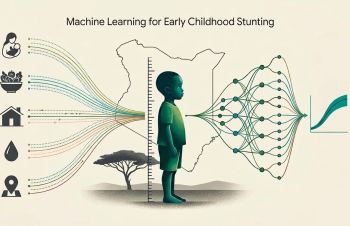
Objective of the study: This study applied supervised machine learning techniques to predict early childhood stunting among children aged 0-23 months and identify associated factors using nationally representative data from the 2022 Kenya Demographic and Health Survey.
Methods: Three models—logistic regression (LR), balanced random forest (BRF), and categorical boosting (CatBoost)—were developed and evaluated using metrics aligned with programmatic priorities, including recall, area under the receiver operating characteristic curve (AUC), F1-score, and Brier Score. To address class imbalance, balanced class weights were applied, and models were trained at a threshold of 0.4 to optimize sensitivity.
Results: CatBoost achieved the highest overall performance (AUC = 70.8%, recall = 85.8%), while LR remained highly competitive (AUC = 71.5%, Recall = 77.2%), outperforming BRF. Across all three models, consistent predictors included the child’s age, sex, birth size, twin status, maternal stature, household wealth, and geographic location, reflecting the multifactorial nature of stunting and aligning with existing literature.
Conclusions: Simpler models, when combined with domain-informed feature engineering, could perform comparably to advanced algorithms while supporting transparency, which is essential for policy-relevant decision-making. The findings also provide methodological support for integrating predictive modelling into nutrition research and highlight opportunities to improve stunting prevention strategies.
Downloads
References
Abdulla, F., Rahman, A., & Hossain, M. M. (2023). Prevalence and risk predictors of childhood stunting in Bangladesh. Plos One, 18(1), e0279901. https://doi.org/10.1371/journal.pone.0279901
Afolabi, R. F., & Palamuleni, M. E. (2021). Exploring determinants of under-5 stunting in Malawi using a generalised linear mixed model. South African Journal of Child Health, 15(1), 18-24. https://hdl.handle.net/10520/ejc-m_sajch_v15_n1_a5
Aggarwal, A., & Mishra, N. (2025). Progress on Selected World Health Assembly Nutrition Targets in 12 countries. Global Alliance for Improved Nutrition. https://doi.org/10.36072/wp.52
Anku, E. K., & Duah, H. O. (2024). Predicting and identifying factors associated with undernutrition among children under five years in Ghana using machine learning algorithms. Plos One, 19(2), e0296625. https://doi.org/10.1371/journal.pone.0296625
Atalell, K. A., Techane, M. A., Terefe, B., & Tamir, T. T. (2023). Mapping stunted children in Ethiopia using two decades of data between 2000 and 2019. A geospatial analysis through the Bayesian approach. Journal of Health, Population and Nutrition, 42(1), 113. https://doi.org/10.1186/s41043-023-00412-3
Ayele, M. K., Baye, G. A., Yesuf, S. H., Engda, A. A., & Mitiku, E. T. (2025). Predicting stunting status among under-five children in Ethiopia using ensemble machine learning algorithms. Scientific Reports, 15(1), 27907. https://doi.org/10.1038/s41598-025-03206-1
Begashaw, G. B., Zewotir, T., & Fenta, H. M. (2025). A deep learning approach for classifying and predicting children's nutritional status in Ethiopia using LSTM-FC neural networks. BioData Mining, 18(1), 11. https://doi.org/10.1186/s13040-025-00425-0
Birk, N., Matsuzaki, M., Fung, T. T., Li, Y., Batis, C., Stampfer, M. J., ... & Lake, E. (2021). Exploration of machine learning and statistical techniques in development of a low-cost screening method featuring the global diet quality score for detecting prediabetes in rural India. The Journal of nutrition, 151, 110S-118S. https://doi.org/10.1093/jn/nxab281
Black, M. M., Lutter, C. K., & Trude, A. C. (2020). All children surviving and thriving: re-envisioning UNICEF's conceptual framework of malnutrition. The Lancet Global Health, 8(6), 766-767. https://doi.org/10.1016/S2214-109X(20)30122-4
Breisinger, C., Keenan, M., Mbuthia, J., & Njuki, J. (2023). Food systems transformation in Kenya: Lessons from the past and policy options for the future. International Food Policy Research Institute. https://doi.org/10.2499/9780896294561
Cai, C., Li, H., Zhang, L., Li, J., Duan, S., Fang, Z., ... & Zeng, Z. (2024). Machine learning identification of nutrient intake variations across age groups in metabolic syndrome and healthy populations. Nutrients, 16(11), 1659. https://doi.org/10.3390/nu16111659
Colmenarejo, G. (2020). Machine learning models to predict childhood and adolescent obesity: a review. Nutrients, 12(8), 2466. https://doi.org/10.3390/nu12082466
Croft, T. N., Allen, C. K., Zachary, B. W., et al. (2023). Guide to DHS statistics: DHS-8. ICF. Retrieved from https://www.dhsprogram.com/pubs/pdf/DHSG1/Guide_to_DHS_Statistics_DHS-8.pdf
Danaei, G., Andrews, K. G., Sudfeld, C. R., Fink, G., McCoy, D. C., Peet, E., ... & Fawzi, W. W. (2016). Risk factors for childhood stunting in 137 developing countries: a comparative risk assessment analysis at global, regional, and country levels. PLoS Medicine, 13(11), e1002164. https://doi.org/10.1371/journal.pmed.1002164
De Onis, M., & Branca, F. (2016). Childhood stunting: a global perspective. Maternal & Child Nutrition, 12, 12-26. https://doi.org/10.1111/mcn.12231
Dessie, G., Li, J., Nghiem, S., & Doan, T. (2025). Prevalence and determinants of stunting-anemia and wasting-anemia comorbidities and micronutrient deficiencies in children under 5 in the least-developed countries: a systematic review and meta-analysis. Nutrition Reviews, 83(2), e178-e194. https://doi.org/10.1093/nutrit/nuae063
Elema, T. B., Nega, F., Ali, J. M., Edae, G., & Boneya, D. J. (2025). Magnitude and determinants of stunting among children under five years of age in Ethiopia: a systematic review and meta-analysis. Frontiers in Pediatrics, 13, 1499921. https://doi.org/10.3389/fped.2025.1499921
Ekbote, N., Dhanshetti, P., & Sakhrekar, S. (2023). Techniques of Exploratory Data Analysis. Madhya Pradesh Journal of Social Sciences, 28(2).
Food and Agriculture Organization of the United Nations. (2021). Minimum dietary diversity for women. https://doi.org/10.4060/cb3434en
Georgiadis, A., & Penny, M. E. (2017). Child undernutrition: opportunities beyond the first 1000 days. The Lancet Public Health, 2(9), e399. https://doi.org/10.1016/s2468-2667(17)30154-8
Habimana, J. D. D., Uwase, A., Korukire, N., Jewett, S., Umugwaneza, M., Rugema, L., & Munyanshongore, C. (2023). Prevalence and correlates of stunting among children aged 6–23 months from poor households in Rwanda. International Journal of Environmental Research and Public Health, 20(5), 4068. https://doi.org/10.3390/ijerph20054068
Haile, Y. T., & Legisso, T. Z. (2024). Trends and determinants of child stunting in Ethiopia: a longitudinal analysis of sociodemographic factors and regional disparities. BMC Public Health, 24(1), 3391. https://doi.org/10.1186/s12889-024-20962-3
Htet, M. K., Do, T. T., Wah, T., Zin, T., Hmone, M. P., Raihana, S., ... & Dibley, M. J. (2023). Socio-economic and agricultural factors associated with stunting of under 5-year children: findings from surveys in mountains, dry zone and delta regions of rural Myanmar (2016–2017). Public Health Nutrition, 26(8), 1644-1657. https://doi.org/10.1017/S1368980023001076
ICF.(2018). Demographic and health surveys standard recode manual for DHS-7. The Demographic and Health Surveys Program. Retrieved from https://dhsprogram.com/pubs/pdf/DHSG4/Recode7_DHS_10Sep2018_DHSG4.pdf
Islam, M. M., Kibria, N. M. S. J., Kumar, S., Roy, D. C., & Karim, M. R. (2024). Prediction of undernutrition and identification of its influencing predictors among under-five children in Bangladesh using explainable machine learning algorithms. PloS One, 19(12), e0315393. https://doi.org/10.1371/journal.pone.0315393
Kalinda, C., Phri, M., Qambayot, M. A., Ishimwe, M. C. S., Gebremariam, A., Bekele, A., & Wong, R. (2023). Socio-demographic and environmental determinants of under-5 stunting in Rwanda: Evidence from a multisectoral study. Frontiers in Public Health, 11, 1107300. https://doi.org/10.3389/fpubh.2023.1107300
Khan, J. R., Chowdhury, S., Islam, H., & Raheem, E. (2019). Machine learning algorithms to predict the childhood anemia in Bangladesh. Journal of Data Science, 17(1), 195-218. https://doi.org/10.6339/JDS.201901_17(1).0009
Kinshella, M. L. W., Moore, S. E., & Elango, R. (2020). Beyond Reproduction: The “First 1,000 Days” Approach to Nutrition through a Gendered Rights-Based Lens. Health and Human Rights, 22(2), 113. https://pmc.ncbi.nlm.nih.gov/articles/PMC7762907/
Kirk, D., Kok, E., Tufano, M., Tekinerdogan, B., Feskens, E. J., & Camps, G. (2022). Machine learning in nutrition research. Advances in Nutrition, 13(6), 2573-2589. https://doi.org/10.1093/advances/nmac103
KNBS, Ministry of Health, ICF. (2023). Kenya Demographic and Health Survey 2022. Demographic and Health Survey, Kenya National Bureau of Statistics, Nairobi. Retrieved from https://dhsprogram.com/pubs/pdf/FR380/FR380.pdf
Laksono, A. D., Wulandari, R. D., Amaliah, N., & Wisnuwardani, R. W. (2022). Stunting among children under two years in Indonesia: Does maternal education matter?. Plos One, 17(7), e0271509. https://doi.org/10.1371/journal.pone.0271509
Leroy, J. L., & Frongillo, E. A. (2019). Perspective: what does stunting really mean? A critical review of the evidence. Advances in Nutrition, 10(2), 196-204. https://doi.org/10.1093/advances/nmy101
Levy, J. J., & O’Malley, A. J. (2020). Don’t dismiss logistic regression: the case for sensible extraction of interactions in the era of machine learning. BMC Medical Research Methodology, 20(1), 171. https://doi.org/10.1186/s12874-020-01046-3
Masit, J., Malenje, B. M., & Imboga, H. (2024). Spatial patterns and risk factors of stunting among under-five children in Kenya: a multilevel and spatial analysis. International Journal of Data Science and Analysis, 10(3), 49-60. https://doi.org/10.11648/j.ijdsa.20241003.12
Mengesha, A., Hailu, S., Birhane, M., & Belay, M. M. (2021). The prevalence of stunting and associated factors among children under five years of age in southern Ethiopia: community based cross-sectional study. Annals of Global Health, 87(1), 111. https://doi.org/10.5334/aogh.3432
Okutse, A. O., & Athiany, H. (2025). Socioeconomic disparities in child malnutrition: trends, determinants, and policy implications from the Kenya demographic and health survey (2014-2022). BMC Public Health, 25(1), 295. https://doi.org/10.1186/s12889-024-21037-z
Perin, L. H. (2018). Machine learning approaches for predicting diabetes and determining risk factors from epidemiological data. http://hdl.handle.net/10183/184968
Qasrawi, R., Sgahir, S., Nemer, M., Halaikah, M., Badrasawi, M., Amro, M., ... & Al-Jawaldeh, A. (2024). Machine learning approach for predicting the impact of food insecurity on nutrient consumption and malnutrition in children aged 6 months to 5 years. Children, 11(7), 810. https://doi.org/10.3390/children11070810
Rahman, M. T., & Akter, S. (2025). Changing Determinants of Child Wasting: Insights from the Prevalence of Stunting, Wasting, and Malnutrition and Their Determinants—An Analysis of BDHS 2022 Data. https://doi.org/10.21203/rs.3.rs-6737252/v1
Rajula, H. S. R., Verlato, G., Manchia, M., Antonucci, N., & Fanos, V. (2020). Comparison of conventional statistical methods with machine learning in medicine: diagnosis, drug development, and treatment. Medicina, 56(9), 455. https://doi.org/10.3390/medicina56090455
Rakotomanana, H., Gates, G. E., Hildebrand, D., & Stoecker, B. J. (2017). Determinants of stunting in children under 5 years in Madagascar. Maternal & Child Nutrition, 13(4), e12409. https://doi.org/10.1111/mcn.12409
Rao, B., Rashid, M., Hasan, M. G., & Thunga, G. (2025). Machine Learning in Predicting Child Malnutrition: A Meta-Analysis of Demographic and Health Surveys Data. International Journal of Environmental Research and Public Health, 22(3), 449. https://doi.org/10.3390/ijerph22030449
Rothman, K. J., Greenland, S., & Lash, T. L. (2008). Modern epidemiology (3rd ed.). Lippincott Williams & Wilkins.
Ruqiya, Noman Khan, & Saira Khan. (2024). Comparing Models and Performance Metrics for Lung Cancer Prediction using Machine Learning Approaches. Sir Syed University Research Journal of Engineering & Technology, 14(2), 29–33. https://doi.org/10.33317/ssurj.629
Sánchez‐Martínez, L. J., Charle‐Cuéllar, P., Dougnon, A. O., Toure, F., Vargas, A., Hernández, C. L., & López‐Ejeda, N. (2025). Socioeconomic Risk Factors Associated With Acute Malnutrition Severity Among Under‐Five Children Based on a Machine Learning Approach: The Case of Rural Emergency Contexts in Niger and Mali. Maternal & Child Nutrition, 21(4), e70039. https://doi.org/10.1111/mcn.70039
Scott, J. A. (2020). The first 1000 days: A critical period of nutritional opportunity and vulnerability. Nutrition & Dietetics, 77(3). https://doi.org/10.1111/1747-0080.12617
Shen, H., Zhao, H., & Jiang, Y. (2023). Machine learning algorithms for predicting stunting among under-five children in Papua New Guinea. Children, 10(10), 1638. https://doi.org/10.3390/children10101638
Soliman, A., De Sanctis, V., Alaaraj, N., Ahmed, S., Alyafei, F., Hamed, N., & Soliman, N. (2021). Early and long-term consequences of nutritional stunting: From childhood to adulthood. Acta Bio Medica: Atenei Parmensis, 92(1), e2021168. https://doi.org/10.23750/abm.v92i1.11346
Tadesse, G. A., Ferguson, L., Robinson, C., Kuria, S., Wanyonyi, H., Murage, S., ... & Dilkina, B. (2025). Forecasting acute childhood malnutrition in Kenya using machine learning and diverse sets of indicators. PLoS One, 20(5), e0322959. https://doi.org/10.1371/journal.pone.0322959
Tamanna, T., Mahmud, S., Salma, N., Hossain, M. M., & Karim, M. R. (2025). Identifying determinants of malnutrition in under-five children in Bangladesh: insights from the BDHS-2022 cross-sectional study. Scientific Reports, 15(1), 14336. https://doi.org/10.1038/s41598-025-99288-y
Tamir, T. T., Gezhegn, S. A., Dagnew, D. T., Mekonenne, A. T., Aweke, G. T., & Lakew, A. M. (2024). Prevalence of childhood stunting and determinants in low and lower-middle income African countries: Evidence from standard demographic and health survey. PloS One, 19(4), e0302212. https://doi.org/10.1371/journal.pone.0302212
Tanaka, J., Yoshizawa, K., Hirayama, K., Karama, M., Wanjihia, V., Changoma, M. S., & Kaneko, S. (2019). Relationship between dietary patterns and stunting in preschool children: a cohort analysis from Kwale, Kenya. Public Health, 173, 58-68. https://doi.org/10.1016/j.puhe.2019.05.013
Theodore Armand, T. P., Nfor, K. A., Kim, J. I., & Kim, H. C. (2024). Applications of artificial intelligence, machine learning, and deep learning in nutrition: A systematic review. Nutrients, 16(7), 1073. https://doi.org/10.3390/nu16071073
United Nations Children's Fund (2025). Levels and trends in child malnutrition child malnutrition: UNICEF/WHO/World Bank Group Joint Child Malnutrition Estimates: Key findings of the 2025 edition. United Nations Children’s Fund. https://www.who.int/publications/i/item/9789240112308
Vaivada, T., Akseer, N., Akseer, S., Somaskandan, A., Stefopulos, M., & Bhutta, Z. A. (2020). Stunting in childhood: an overview of global burden, trends, determinants, and drivers of decline. The American journal of clinical nutrition, 112, 777-791. https://doi.org/10.1093/ajcn/nqaa159
Yani, D. I., Rahayuwati, L., Sari, C. W. M., Komariah, M., & Fauziah, S. R. (2023). Family household characteristics and stunting: an update scoping review. Nutrients, 15(1), 233. https://doi.org/10.3390/nu15010233
Yehuala, T. Z., Baykemagn, N., & Terefe, B. (2025). Machine learning algorithms to predict feeding practices during diarrheal disease and its determinants among under-five children in East Africa. Frontiers in Public Health, 13, 1513922. https://doi.org/10.3389/fpubh.2025.1513922
Downloads
Published
Data Availability Statement
The KDHS data is publicly available and can be accessed from the Kenya National Data Archive (KeNADA)
Issue
Section
License
Copyright (c) 2026 Bernard G Thuo

This work is licensed under a Creative Commons Attribution 4.0 International License.
Authors retain all copyrights. In making a submission to World Nutrition, they are certifying that all material is theirs except quotations, as indicated, and that they have obtained permission for any photos, tables, or graphics taken from other publications or websites.
How to Cite
Share