Meal provisioning and food handling practices at Early Childhood Development (ECD) centres. A cross-sectional study in Johannesburg, South Africa
DOI:
https://doi.org/10.26596/wn.202617270-79
Keywords:
Food handling, Dietary Diversity Score, Menu quality, Food safety, Early childhood development centres, Childcare, Early childhood Education and Care, Meal or food provisionAbstract
Background
Early Childhood Development (ECD) centres have been recognised as an important setting to improve children’s dietary intake and eating habits. ECD centres can provide a large proportion of their daily dietary requirements during attendance.
Objective
The present study aimed to evaluate the meal provisioning and describe the food handling practices of food handlers at registered ECD centres in Johannesburg, South Africa.
Methods
A descriptive cross-sectional study with an analytical component was conducted among 48 participants from 22 registered ECD centres, each visited for one day. ECD managers completed a self-administered questionnaire on demographics and perceived barriers to providing healthy food, while food handlers completed an interviewer-administered version. An observational checklist was used to assess the food provisioning environment. Dietary diversity scores (DDS) of meals served were calculated using the FAO 13-food group DDS questionnaire.
Results
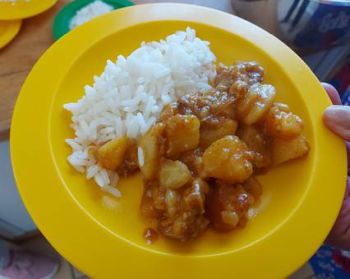
All ECD centres could provide a menu, but 31% did not adhere to the menu. At least two meals/snacks were served, which had a mean DDS of 3.6 (SD 1.00). Meals consisted mainly of starch (100%) and dairy products (73%). Only 41% of ECD centres had trained their staff on correct handwashing procedures. There was no significant difference between the practices in formal and informal ECD centres (p>0.05). The barriers to optimal nutrition included lack of external funders (68%), lack of government support (59%), tedious registration process (55%), and loadshedding (planned power outages) (52%).
Conclusion
Optimising child nutrition is key to reducing malnutrition, as stunting and undernutrition have major individual and societal impacts. Ongoing training and monitoring are needed to support ECD practitioners in applying nutrition guidelines, ensuring safe food handling, and providing nutritious meals that promote healthy growth and development.
Downloads
Downloads
Published
Data Availability Statement
All relevant data are available within the manuscript
Issue
Section
License
Copyright (c) 2026 Christel K. Kimoto, Moleen Zunza, Ros Sambell, Yolande Smit

This work is licensed under a Creative Commons Attribution 4.0 International License.
Authors retain all copyrights. In making a submission to World Nutrition, they are certifying that all material is theirs except quotations, as indicated, and that they have obtained permission for any photos, tables, or graphics taken from other publications or websites.
How to Cite
Share